
Fireworks Eye Safety

Written By: Dan Gudgel

Reviewed By: Thomas L Steinemann MD

Original Publication:
AAO

The numbers are clear: fireworks are dangerous, and the month around July 4th is the most dangerous time. According to the U.S. Consumer Product Safety Commission's most recent annual fireworks injury report (PDF) fireworks caused eight deaths and nearly 13,000 injuries in 2017. Two-thirds of the fireworks injuries treated in emergency rooms happened between mid-June and mid-July.

Fireworks may be advertised like toys around the Fourth of July. You may think you know how to handle them safely. But playing with fireworks can blind you or your loved ones. Leave fireworks to the professionals.

Facts About Eye Injuries

The most recent Consumer Product Safety Commission report found that 14% of fireworks injuries were eye injuries. In the most severe cases, fireworks can rupture the globe of the eye, cause chemical and thermal burns, corneal abrasions and retinal detachment — all of which can cause permanent eye damage and vision loss.

Children and young adults are frequent victims. Children age 15 and under accounted for 36% of the total injuries, according to the commission's report. And half of the injuries requiring an emergency room visit were to people age 20 or younger.

Even sparklers can be dangerous, as they burn at more than 2,000 degrees Farenheit. Sparklers were responsible for 1,200 of the injuries in the latest report, and a sparkler mishap caused one of the fireworks deaths reported in 2017.

The people injured by fireworks aren't necessarily handling the explosives themselves. In fact, 65% of people injured by fireworks were bystanders, according to another study. The statistics don't lie. Children and people not handling fireworks themselves are in as much danger as the people actually lighting fireworks.

What to Do for a Fireworks Eye Injury

Fireworks-related eye injuries can combine blunt force trauma, heat burns and chemical exposure. If an eye injury from fireworks occurs, it should be considered a medical emergency.

Seek medical attention immediately.

  • Do not rub your eyes.

  • Do not rinse your eyes.

  • Do not apply pressure.

  • Do not remove any objects that are stuck in the eye.

  • Do not apply ointments or take any blood-thinning pain medications such as aspirin or ibuprofen unless directed by a doctor.

Fireworks Safety Tips

The best way to avoid a potentially blinding fireworks injury is by attending a professional, public fireworks show rather than purchasing fireworks for home use.

If you attend or live near a professional fireworks show:

  • Respect safety barriers, follow all safety instructions and view fireworks from at least 500 feet away.

  • Do not touch unexploded fireworks; instead, immediately contact local fire or police departments to help.

For those who decide to purchase and use consumer fireworks in states where they are legal (PDF), follow these safety tips from the Consumer Product Safety Commission:

  • Do not allow young children to play with fireworks. Sparklers, a firework often considered by many to be the ideal "safe" device for the young, burn at very high temperatures and should be not be handled by young children. Children may not understand the danger involved with fireworks and may not act appropriately while using the devices or in case of emergency.

  • Older children should be permitted to use fireworks only under close adult supervision.

  • Do not allow any running or horseplay.

  • Set off fireworks outdoors in a clear area, away from houses, dry leaves, or grass and other flammable materials.

  • Keep a bucket of water nearby for emergencies and for pouring on fireworks that fail to ignite or explode.

  • Do not try to relight or handle malfunctioning or "dud" fireworks. Soak them with water and throw them away.

  • Be sure other people are out of range before lighting fireworks.

  • Never light fireworks in a container, especially a glass or metal container.

  • Keep unused fireworks away from firing areas.

  • Store fireworks in a cool, dry place.

  • Check instructions for special storage directions.

  • Observe local laws.

  • Never have any portion of your body directly over a firework while lighting.

  • Do not experiment with homemade fireworks.
Juley
Healthy Vision Month
2014-h-v-month.jpg

CDC - Healthy Vision Month - Vision Health Initiative (VHI)

May is Healthy Vision Month: You can have a comprehensive dilated eye exam to check for common eye problems. If you haven’t had an exam in a while, schedule one now.

Taking care of your eyes can be a priority just like eating healthy and physical activity. Healthy vision can help keep you safe each day. To keep your eyes healthy, get a comprehensive dilated eye exam: an eye care professional will use drops to widen the pupils to check for common vision problems and eye diseases. It’s the best way to find out if you need glasses or contacts, or are in the early stages of any eye-related diseases.

Vision Health for All Ages

You can have a dilated eye exam regularly to check for common eye problems. If you haven’t had an exam for some time, schedule one this month.

CDC’s Vision Health Initiative partners with the National Eye Institute to encourage all Americans to make vision a health priority this Healthy Vision Month.

  • Although older adults tend to have more vision problems, preschoolers may not see as well as they can.

  • Just 1 out of every 7 preschoolers receives an eye exam, and fewer than 1 out of every 4 receives some type of vision screening.

  • The U.S. Preventive Services Task Force recommends vision screening for all children aged 3 to 5 years to find conditions such as amblyopia, or lazy eye, which can be treated effectively if caught early.

Some eye conditions can cause vision loss and even blindness. These include

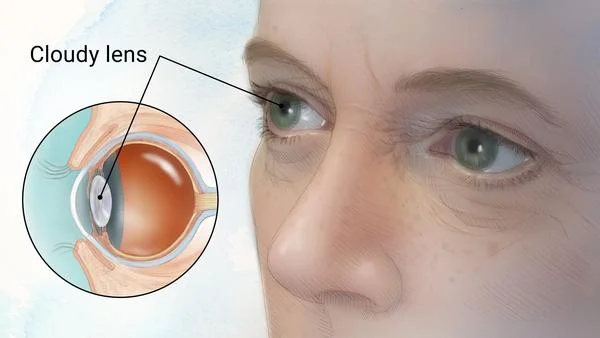
  • Cataracts, a clouding of the eye.

  • Diabetic retinopathy, which causes damage to the blood vessels in the back of the eye.

  • Glaucoma, damage to the optic nerve, often with increased eye pressure.

  • Age-related macular degeneration, which gradually affects central vision.

Other eye conditions, such as refractive errors, which happen when the shape of your eye doesn’t bend light correctly, are common problems easily corrected with glasses, contact lenses, or laser surgery. An estimated 11 million Americans aged 12 years and older could see better if they used corrective lenses, or eye surgery, if appropriate.

Nine ways you can help protect your vision

  1. Get regular comprehensive dilated eye exams.

  2. Know your family’s eye health history. It’s important to know if anyone has been diagnosed with an eye disease or condition, since some are hereditary.

  3. Eat right to protect your sight: In particular, eat plenty of dark leafy greens such as spinach, kale, or collard greens, and fish that is high in omega-3 fatty acids such as salmon, albacore tuna, trout, and halibut.

  4. Maintain a healthy weight.

  5. Wear protective eyewear when playing sports or doing activities around the home, such as painting, yard work, and home repairs.

  6. Quit smoking or never start.

  7. Wear sunglasses that block 99 percent-100 percent of ultraviolet A (UVA) and ultraviolet B (UVB) radiation.

  8. Wash your hands before taking out your contacts and cleanse your contact lenses properly to avoid infection.

  9. Practice workplace eye safety.

Eyes and Overall Health

Taking care of your eyes also may benefit your overall health. People with vision problems are more likely than those with good vision to have diabetes, poor hearing, heart problems, high blood pressure, lower back pain and strokes, as well as have increased risk for falls, injury and depression. Among people aged 65 and older, 54.2 percent of those who are blind and 41.7 percent of those with impaired vision say their overall health is fair or poor. Just 21.5 percent of older Americans without vision problems reported fair to poor health.

In addition to your comprehensive dilated eye exams, visit an eye care professional if you have

  • Decreased vision.

  • Eye pain.

  • Drainage or redness of the eye.

  • Double vision.

  • Diabetes.

  • Floaters (tiny specks that appear to float before your eyes).

  • Circles (halos) around light sources; or

  • If you see flashes of light.

For this Healthy Vision Month, take care of your eyes to make them last a lifetime.

More Information

Juley