Eye Health Information for Adults Over 65

It’s important to have a complete eye exam with your ophthalmologist every year or two after age 65.

Keeping up with regular eye exams allows your ophthalmologist to catch problems early. The sooner a problem is detected, the more likely it is that treatment will be successful.

The Academy recommends adults age 65 and older see their ophthalmologist for a complete eye exam every year or every other year.

During regular eye exams, your ophthalmologist will check for age-related eye diseases, including:

age-related macular degeneration

diabetic retinopathy

glaucoma

cataract

read more: https://www.aao.org/eye-health/tips-prevention/seniors

Leer en Español: https://www.aao.org/salud-ocular/consejos/información-sobre-salud-ocular-para-adultos-mayore

👁 Need an eye exam? – call us today!

Don’t let your vision get in the way. If you think your eyesight has recently changed or could be better, set an appointment with Eye Florida at 407-891-2010.

Fax: 407.891.8211 | www.eyeflorida.com

📍Main Clinic | 1330 Budinger Ave, Ste 200, St Cloud, FL 34769

‪source: aao

Ly Nguyen
Healthy Vision Starts With a Dilated Eye Exam

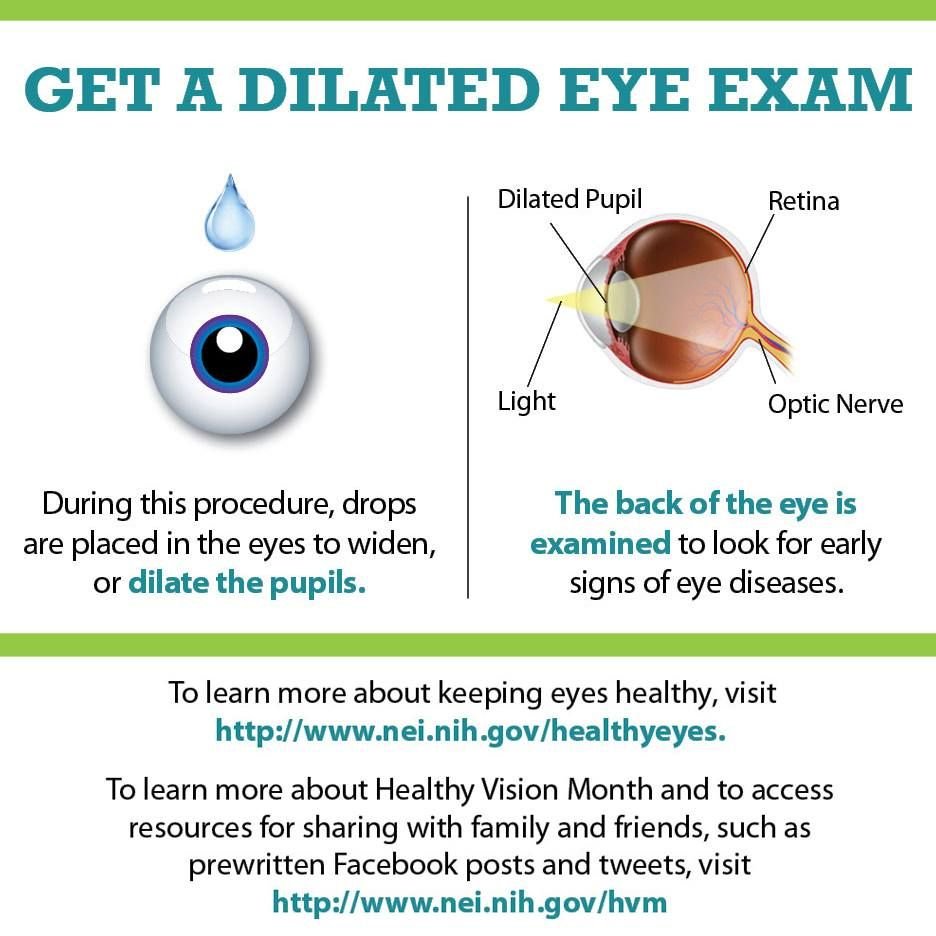
Getting a comprehensive dilated eye exam is one of the best things you can do to keep your eyes healthy. In this painless procedure, an eye care professional examines your eyes to look for common vision problems and eye diseases, many of which have no early warning signs.

Different from the basic eye exam you have for glasses or contact lenses, a comprehensive dilated eye exam can help protect your sight by making sure you are seeing your best and detecting eye diseases in their early stages, before vision loss has occurred.

A comprehensive dilated eye exam includes the following:

• Dilation—Drops are placed in your eyes to dilate, or widen, the pupils. Your eye care professional uses a special magnifying lens

to examine your retina to look for signs of damage and other eye problems, such as diabetic retinopathy or age-related macular degeneration. A dilated eye exam also allows your eye care professional to check for damage to the optic nerve that occurs when a person has glaucoma. After the examination, your close-up vision may remain blurred for several hours.

• Tonometry—This test helps to detect glaucoma by measuring eye pressure. Your eye care professional may direct a quick puff of air onto the eye, or gently apply a pressure-sensitive tip near or against the eye. Numbing drops may be applied to your eye for this test. Elevated pressure is a possible sign of glaucoma.

• Visual field test—This test measures your side (peripheral) vision. It helps your eye care professional find out if you have lost side vision, a sign of glaucoma.

• Visual acuity test—This eye chart test measures how well you see at various distances.

To learn more about comprehensive dilated eye exams and eye health, visit http://www.nei.nih.gov/healthyeyes.

La importancia de hacerse un examen completo de los ojos con dilatación de las pupilas (Healthy Vision Starts With a Dilated Eye Exam)

https://www.nei.nih.gov/learn-about-eye-health/outreach-campaigns-and-resources/outreach-materials/la-importancia-de-hacerse-un-examen-completo-de-los-ojos-con-dilatacion-de-las-pupilas-healthy

Ly Nguyen